Wednesday, 13 January 2016

Commonplace 143  George & His Contemporaries: Anthony Trollope.

With images from Augustus Edwin Mulready (1844-1905).

George could have learnt a lot from reading a biography of Anthony Trollope (1815-1882). Born into a modest family but with financial 'expectations' (in the Dickens sense) to a mother who never bonded with him, and a father who was severe and aloof, young Anthony and an older brother were subjected to the humiliation of being sent to a public school as day-boys - the sorts of pupils who were obviously too poor to board/pay fees. They were also poorly dressed and wore shoddy shoes and both were ritually humiliated for it by their peers.
Flower Seller 1882
Mr Trollope Snr's expectations were eventually dashed and he had to carry on failing to make a living in Law. He did not do well, mainly because he was a truculent sort of cove who did not make enough contacts to earn a living at his calling. But Mrs Trollope – Fanny to her friends - was a woman in love with spending money; she sent Anthony and his brother to Winchester school, a prestigious establishment that routinely prepared young men for Oxford universities. Tom, the older of the Trollopes, was made a prefect. Encouraged by their mother to make himself responsible for Anthony’s behaviour, Tom applied daily thrashings and generally made his little brother’s life a misery, and Anthony never forgave him or their parents, for making his early years so unhappy.

Eventually, things deteriorated further. The family went to America to make money and poor Anthony was left behind alone in the UK, more or less to take care of himself. Disaster struck when his school fees were not paid and all credit in shops was stopped, leaving Anthony homeless during the holidays and all but destitute. In his autobiography, Anthony says he contemplated suicide as a way out of his dire situation. Anthony was removed from Winchester and returned to Harrow, where he was bullied once more, his studies suffered, and he became withdrawn and miserable. Fortunately, Fanny Trollope (one of the great names of Eng. Lit) managed to write some best-selling books and saved the day. However, much of that money she made was eaten up by creditors, and the Trollopes had to decamp to Belgium to escape them – after leaving Anthony alone in the UK once more.
Little Flower Sellers 1887
When he left school, Trollope was virtually uneducated, and academically unfit for most work – far too undeveloped for university. When he was 19, his mother found him a place in the Post Office, as a clerk. Initially, he was over-worked and well under-paid, like thousands of young men in similar positions. For example, William, George's brother, who worked in a Manchester bank, wrote in his letters that he worked sometimes 16-hour days and wasn't paid enough to keep himself in decent clothes and had to borrow from his mother - he earned about as much as Trollope, who once wrote how he found it difficult to '...live in London, keep up my character as a gentleman, and be happy, on £90 a year'. George was never, ever, that hard up, yet he harped on about his years of poverty haha. 

Anthony stayed with the Post Office for most of his working life, but he was lucky to find relief from the monotony by being appointed as Post Office Surveyor's clerk in Ireland, a job where he was able to mix office duties with official expeditions to places of natural beauty. He found a wife, settled to family life, and took up writing. He moved back to England, and it was when in Salisbury in Wiltshire that he found the inspiration for the first of what would become known as the Barchester novels. He maintained a gruelling daily round of being at his writing desk for 5.30am, stopped at 9.30, 2,500 words later, to take breakfast. He then travelled to London to do his day job, working at his Post Office desk from 11.30am-5pm, before setting off for an evening's socialising. Imagine George putting in that amount of effort! We know he resented working at proper jobs that took up his precious reading time, and even the few hours a day he did at teaching irked him beyond belief. 

A London Jo at The End of the Day 1884
Of the Salisbury visit, the source of the fictional Barchester, in 1852: '...wandering there one summer evening ... I conceived the story of The Warden' (the first Barchester novel) but later said it might have been based on any cathedral town like Hereford, Exeter, Gloucester or Canterbury. whatever the geographical source, these novels proved very popular, and moved Trollope into the main league of literary lions, though he never made a terrific fortune from his work. He kept up his Post Office work, so he was never financially hard up, but in an age when success was purely measured in monetary worth, it bothered him to know he was not as rich as Wilkie Collins, or Charles Dickens. He married and had two sons - the marriage was to last until his death, but he took up with a young woman, Kate Field, an American actress, journalist and pioneering feminist; it was a platonic friendship, conducted mainly by letter, Trollope's rival for Kate Field's affections was his literary rival, Wilkie Collins. To find out more about this fascinating woman, here is a free copy of a biography written in 1899 by one of her friends click
Uncared for 1871
Trollope is famed for his satirical stories critiquing society's ordinary people, whatever their class. 
Writing successful novels came a little too easy to him, and so he grew restless for more fame and renown. In 1867, he resigned from the Post Office after taking up the editorship of the monthly St Paul's Magazine, where he remained for 4 years. He made many short story contributions to the magazine, as did Fanny (who went on to write over 40 novels herself), but the magazine failed. Maybe the readership grew tired of all that work by the Trollopes? Undeterred, Anthony took up politics - the Liberal cause. It ended badly, of course.   
A London Newsboy c 1884
In 1875, Trollope wrote probably his most famous novel: 'The Way We Live Now'. Of which, he said:
Nevertheless a certain class of dishonesty, dishonesty magnificent in its proportions, and climbing into high places, has become at the same time so rampant and so splendid that there seems to be reason for fearing that men and women will be taught to feel that dishonesty, if it can become splendid, will cease to be abominable. If dishonesty can live in a gorgeous palace with pictures on all its walls, and gems in all its cupboards, with marble and ivory in all its corners, and can give Apician dinners, and get into Parliament, and deal in millions, then dishonesty is not disgraceful, and the man dishonest after such a fashion is not a low scoundrel. Instigated, I say, by some such reflections as these, I sat down in my new house to write The Way We Live Now.
Listen to the novel here, as a free download click. And think of Dyce Lashmar (George's Our Friend the Charlatan).

Anthony Trollope is not widely read now, though, like George, he has his dedicated followers who guard their much-loved volumes like rare treasures. In the www world of quotes, here are a few of Trollope's which might have guided George through the choppy waters of his life's voyage. Some actually sound as if George had said them! From this site click

Love is like any other luxury. You have no right to it unless you can afford it.

This habit of reading, I make bold to tell you, is your pass to the greatest, the purest, and the most perfect pleasure that God has prepared for His creatures. It lasts when all other pleasures fade. It will support you when all other recreations are gone. It will last until your death. It will make your hours pleasant to you as long as you live.

Of all needs a book has, the chief need is to be readable.

There is no way of writing well and also of writing easily.

Little bits of things make me do it; — perhaps a word that I said and ought not to have said ten years ago; — the most ordinary little mistakes, even my own past thoughts to myself about the merest trifles. They are always making me shiver.

AND, FINALLY... George, summed up in a few words:


Throughout the world, the more wrong a man does, the more indignant is he at wrong done to him.

Saturday, 9 January 2016

Commonplace 142 George & Experts on Women.

Representation of the world, like the world itself, is the work of men; they describe it from their own point of view, which they confuse with the absolute truth. Simone de Beauvoir.


The Caress by Fernand Khnopff 1896
George consulted many male thinkers about the thorny issue of how to win the hearts and minds of women. One of the many things he seemed most convinced of was that he could add to this debate. This, in the face of some spectacular failures in the cases of his first two wives. And despite his pronouncement that the average woman was about as clever as a male idiot. And he was the man who wrote to his sister. February 3rd 1883 (when she was 15 and he was 25):  You girls nowadays have astonishing advantages over your mothers and grandmothers; it is only to be hoped you will make use of it for the only real end of education - improvement of character. If you only could know how much of the wretchedness of humanity is occasioned by the folly, pig-headedness, ignorance, incapacity of women you would rejoice to think of all these new opportunities for mental & moral training.

Knowledge of human psychology was not one of George's specialisms, and he didn't develop much of a sympathy for human beings in general. In the absence of experienced peers to consult - remember, in his early twenties, the closest confidant with whom he could discuss these things was man-wife Eduard Bertz, a man with very limited knowledge of the subject - George turned to published authors who claimed to be experts. Dipping into some of these works proves these men were no such thing.
I Lock My door Upon Myself by Fernand Khnopff 1891
Henry Thomas Buckle (see previous Commonplace) was far from alone when he argued that the Greeks and Romans tended to regard women as chattels, and so using the Classics to provide any sort of understanding about how to treat women would be ill advised (click for free download). George's love of all things Roman and Greek must have fed into his attitudes to females. Add to this the influence of Arthur Schopenhauer, and things do not look good for any woman who came into his orbit. On this topic, Schopenhauer makes the Romans and Greeks look like emancipated liberals.

I have covered the dire influence of Schopenhauer in previous posts - see Commonplace 4 for exactly what that odious little imp - a man made bitter by his lack of success with the ladies, especially one thirty years his junior - had to say on the complementary gender. On the plus side, he liked dogs.

In Commonplaces 116 and 117, we looked at what John Ruskin had to say on the subject of women. When George was in the States, he met a charlatan called Heinzen (see Commonplaces 133 and 134) who aimed to spout on the subject of suffrage. But, there were two other influences George soaked up. First, Charles Darwin.
The English Woman
by Fernand Khnopff 1898
Popular understanding says that Darwin had some pretty bad things to say about women: that it was preferable to have a wife than a dog for company, being one of them. He tended to think adult females were perennially more like the infant of its species, and so a woman's brain would always be biologically underdeveloped and undevelopable. However, what Darwin said in his public utterances and the beliefs he held in private, were contradictory, and... evolved over time. Here, explored in this Cambridge University Research video click. But, George would not be privy to the secret thoughts of Charles Darwin, and so what he understood about the biology of women's brains, and their potential for any sort of development, would depend on what he thought Darwin had gleaned from his studies. See Commonplace 101 for George's studies of female brain size, and how wrong he was on this topic.

Another influential voice in how to create a world better suited to sharing it in equality, men with women, George delved into when he was in the throes of wooing Gabrielle Fleury, was the work of an influential French historian. In December 1898, George reads Jules Michelet's 'L'Amour'. Michelet wrote on a range of more sociological subjects. 'L'Amour' was followed the next year by 'La Femme' (can you spot a trend?).

These two Michelet works were derided by his fellow-French readers, but maybe George was reading all things contemporary French so as to have something to say to Ms Fleury, and to prove he was in touch with his feelings for what makes women happy. We know Gabrielle had strong reservations about 'marrying'George, and he has to make a determined effort to allay her anxieties by bluntly (and dishonestly, deceitfully) denying what he is famed for having said about women. He blames the excesses of his misogyny on some sort of creative fictive, a million miles from what he really believed. Tosh, of course, said to persuade Gabrielle into risking herself to his care. He kept from her his track record, defaming his wife, Edith, whilst air brushing out his first wife from the record - much as he did when he was making abid for Miss Collet's sympathy.

 Michelet's work was well-known even in England, so George was probably familiar with his work, and possibly agreed that (in Michelet's opinion) women were perpetual invalids, victims of their bodily functions particularly menstruation, which was, to the deluded Frenchman, a state of eternal malady. He went so far as to suggest it is this weakness that makes women suited to domestic chores and home-making, and that women are really only happy when we are keeping house, because any other sphere would distract us from dealing with our physical disadvantages. He is building on the work of Paracelsus (1493-1541) here, who thought a woman's womb as a house within her, and so this makes her very home-centric click.
Incense by Fernand Khnopff 1898
His next book was about witches click and so it's clear Michelet had met some very interesting girls in his time - or fantasized about meeting them! 'La Sorcerie' the Witch of the Middle Ages' of 1863 set out to explain that women's close experience of illness and infirmity has equipped us with special powers to heal and treat the sick - hence the association between the healing wise woman and the spell-casting witch. Michelet sees witchcraft as a positive thing, and an exemplification of the way women are persecuted for our vulnerabilities by men who abuse their power.

What did George take away from his studies on this topic? Returning to Schopenhauer, he will have been familiar with that philosopher's 'Will to Life' theory, that says we must look for complements in prospective partners in order to balance our innate faults, because if we don't, our children might manifest inherited intensified versions of our faults. So, if a man is of an intellectual bent, he needs to find a woman who is not, in order to have well-rounded children. Might this belief in Schopenhauer be part of the reason George went looking for a woman as unlike him as Edith? We know he delved into the new pseudoscience of eugenics, but science never held sway with George the way philosophy did - especially German philosophy. Take a look at this click to see a whitewashed view of the old Teutonic misogynist and see how deeply George absorbed his ideas.


Friday, 8 January 2016

Commonplace 141 George & History.

George liked the past. Not his own, perhaps, but the past as recreated by middle class and above male academics, who cherry-picked the bits they wanted to preserve. The best of them were serious-minded explorers who trawled the original sources to find accounts of what had gone before, representing prior times as best they could with what they had found in their research. Of course, most of what was written about in British history, even what was based on primary sources, is skewed in favour of the white, male middle-class and above; women, children and the poor were never fully or fairly represented. In George's day, the British Empire ruled in much of the world - but few historians wanted to view that empire from the position of its subjugated peoples; women, too, were a species beyond the ken of the average male historian.
Sandal Castle near George's home town of Wakefield, West Yorkshire. click
History can be seen as a study in interpretation. Who really knows what motivated Henry VIII to disdain Anne of Cleves? What did he stand to gain from Thomas Cromwell's execution? Did he really write 'Greensleeves'? (Well, no, he didn't, but it is presented as fact in some history books and is often touted in dramatisations of his life.) Was he a good or bad ruler? Was Elizabeth I better? We read the biographies and fall back on making up our own minds, regardless of what we have read. I prefer Elizabeth to Henry, but is that because she's a woman? I always think of her as courageous and a good role model to women who want to live in spite of men, not because of them; whereas Henry seems to be self-indulgent and spendthrift of his talents. Perhaps it's all about identification - I identify with the sort of woman who proves she is as able as any male counterpart.

George was lucky to be born in Yorkshire, a place chockablock with history. Apart from the Vikings, the War of the Roses, and the effects of the English Civil War, (not to mention the Industrial Revolution), one of Yorkshire's most famous claims to historical fame is the Battle of Towton where 28,000 men were killed in one day. If you are fortunate enough to be able to visit the battlefield, you will get some idea of how massive the fray must have been click and how terrain and luck were two of the most significant factors, but not as important as weather. (Remember George's obsession with weather and how it finished him off? Commonplace 139).
Towton Cross battlefield marker.click

Of all the historians George admired, Edward Gibbon (1737-1794) click was probably his favourite. Gibbon's 'The History of The Decline and Fall of the Roman Empire' was a treasure he clung to and reread many times, often using what he found there as inspiration. On a slightly lighter note, he admired John Ruskin, though he went off Ruskin, possibly because of the casual display of wealth Ruskin employed in his writing. For example, in February 1889, when in Venice, George was reading Ruskin's highly-regarded 'The Stones of Venice', a treatise on the Art and architecture of that city. In his diary, George writes:
By the bye, why does Ruskin invariably address himself to rich people? In "S. Mark's Rest", eg, when speaking of the Pillars, he tells you to imitate the capitals by cutting "a pound of Gruyere cheese". Then again "From the Grand Hotel, or the Swiss Pension, or the duplicate Danieli with the drawbridge, or whatever else among the palaces of resuscitated Venice you abide", etc. - This is a great fault. He then goes on to demolish Ruskin and point out the mistakes made in these few extracts (eg no drawbridge at Danieli). Spite and envy, two of George's dark traits, come into play here. Though he admired Ruskin, in secret, George was jealous of the ability, the vision, and the money Ruskin could draw on to swan about writing readable, inspired books. Deep down, George would have liked to be Ruskin, which made jealousy and eventual falling out of love as the only way for him to deal with his feelings of envy. He is being a tad hypersensitive here - Ruskin in using cheese for non-cheese illustrative purposes, and so it cannot be viewed literally. 
Richard Plantagenet 
(Richard III's father click).
In this rant against Ruskin, George goes on:
This fault of temper leads him into other errors. Speaking of the Rialto: "You will probably find it very dirty, - it may be indecently dirty, - that is modern progress, and Mr Buckle's civilization". Absurd; old Venice was vastly dirtier, as we well know. Do we? 

Anyhoo, this chap Buckle; who was he and what was George reading him for?

According to his Wikipedia page (all the greats have Wiki pages haha), and as mentioned by George in September 1889, Henry Thomas Buckle gave us his life's work in the form of his 'History of Civilization' (click for free download). This is not to be confused with Sir Kenneth Clark's opus on all things Art: 'Civilization', (made into a groundbreaking tv series click -everyone should see it), who is not to be mistaken for Ken Clarke, the MP and so-called 'big beast' of the Tory party click, considered left-wing by hard-line Tories. Much as Mao might be seen as to the left of Stalin?? Anyhoo...

Mr Henry Thomas Buckle (1821-1862) was a chap who was too ill for much school learning when he was a child, but managed to become an expert historian, thanks to the 10-hour days of self-imposed study he put into learning all about it. He inherited enough money to travel and fund the writing of his comprehensive overview of whatever he thought might be termed 'Civilization'. In a time when science was highly regarded, and when every discipline required a testable application of some sort of scientific principle, Buckle was of the opinion that history has a similar set of predictable and quantifiable, principles. In this, he skates closely to the Positivist creed set down by Auguste Comte, and followed by George for a brief while when he was hobnobbing with Frederic Harrison. To Buckle, external factors such as climate, agriculture and weather have as much impact on civilization as the acts and behaviour of people. He also thought wealth is the basis of culture (which is the bedrock of civilization) - which predates the work of Abraham Maslow click by a century. (It was Maslow who gave us the Hierarchy of Needs that suggest the attainment of self-actualization can only take place in the absence of financial insecurity.) 
Richard III much maligned and much loved by 21st century folks
Born: 1452  Died: 1485. State burial: 2015 click 
Some of Buckle's most ambitious ideas are well worth taking a look at. He held that religion, literature and government are, at the best, the products and not the causes of civilization. (This fits in with generally held twentieth century view that the Arts tend to follow trends, not set them. Artists are observers and interpreters, not innovators.) Another is (from the Wiki page):
That the progress of civilization varies directly as "scepticism," the disposition to doubt and to investigate, and inversely as "credulity" or "the protective spirit," a disposition to maintain, without examination, established beliefs and practices. Buckle was sceptical about the so-called civilizing effects of organised religion, which again is a reasonable view based on what we now know about the terror and bigotry exemplified by religious fundamentalism of all stripes. 
Facial reconstruction of Richard III click
Buckle also wrote for periodicals and his 'The Influence of Women On The Progress of Knowledge' was published by Fraser's Magazine in April of 1858 (the year George's first wife Marianne aka Nell was born). We know George read many books about the 'problem' of women possibly to help him flesh out his female characters, but mostly to give him a template for managing the women in his life. He was spectacularly ignorant of what women are really like, but he wrote confidently about how we should be 'managed', and gave us plenty of tips for how we should behave in a more emancipated climate. None of his relationships with the women in his life were particularly successful - according to George, even his mother wasn't keen on him! He was smart enough to realise that the shoe would soon be on the other foot, and women would be claiming their rights, having waited in vain for men to gift them, and so his study of what were the current trends in suffrage developments was all about self-preservation.

Friday, 1 January 2016

Commonplace 140  George & A Happy New Year

It's another year and, to paraphrase Albert Camus, we who are here are already winning. Hurrah for us!

Though he destroyed his Diaries up to the point in time where his first wife, the neglected and abandoned Marianne aka Nell, died of poverty and scrofula, what entries we have left, albeit in self-serving edited form (and edited by others), allow us to see (almost) where George spent the festivities on each New Year's Day between 1888-1903.
Papa and Albert see in the New Year -
the latter in drag, it seems.
It is odd that George moaned about being lonely yet refused most of the social invites he received, usually blaming the wrong sort of wife for his refusals. In reality, this was nothing more than a finely-crafted bid for a double-whammy of sympathy - firstly for being denied access to parties, and secondly for having a freakishly anti-social wife dragging him down. Both of these were lies. As Nell seems to have been quite normal in her relationship with George's brother, William, and seems to have been popular and friendly to people she met, for example, when she was an in-patient in hospital, and as Edith was always blamed for everything that happened to George post-Nell (and so his biased opinion cannot be believed) we can see that wives 1&2 were denied the chance to mix socially, but were blamed by George for his own stand-offishness. Imagine having to be locked up in the house with Mr Chuckles 24/7 and then stopped from the light relief of attending a party! How did those women put up with him?


So, let's look at George and those brand New Years...

1888 - Finds him recording that he has been reading Thucydides (probably the History of the Peloponnesian Wars) and Great Expectations. He has a date with Morley Roberts, and notes that he berates Roberts about always writing 'morbid' stories. This is a beguilingly peaceful time for George - within two months, Marianne aka Nell will be dead, and things will never be the same again.

1889 - One of the happiest. George is in Italy, in the Florence area. He is happy to wander about the ruins and enjoy the warm sunshine. He is still feeling peaky after his usual bout of man flu. On the evening before, he had dined in a place where revellers were enjoying the imminent New Year celebrations. He writes: ...in vast discomfort, owing to the place being full of Italians in exuberant spirits, who were supping at table d'hote. It made me feel wretched. 

1890 - A special day as George was in Italy once more. Wandering about, he found a Roman coin. George always kept a small collection of special items about his person, items so charged with the vibes of where they were located that they had the power to transport him back to where they were found. No doubt this coin was one of them. He eats with the Shortridge family, friends he had made on his first Italian trip who often offered him hospitality. John Shortridge, the head of the household, was from Yorkshire, but had married an Italian girl and set up home far from the moors and mountains of the north of England. George tells us that at the meal they gave him, he turned down a side dish of pig's blood, cinnamon, raisins, brodo (a broth made of bones) and oil. Good call!
Weird!
1891 - Romance is in the cold, frosty air: Edith is being wooed. Xmas had been spent with Edith's family; she had given him a silk muffler as his gift. He gave her a pair of gloves. Gloves were quite an intimate item for a first Xmas gift - an item, in fact, with many erotic associations, as they could be removed by a lover, toyed with, and held the fragrance of the wearer. And things can be inserted into them.

1892 - Walter's first Xmas. Edith suffered so much during childbirth she took weeks to recuperate. This meant she couldn't tend to the baby, leaving George very much in the firing line. Of the many roles George was not cut out for, parenthood was probably up there with husband in terms of what he should have avoided. Moaning about it already, George is seething with resentment and self-pity, with Walter just 3 weeks old. Complaining about the medical fees and the cost of the bassinet, etc, he is contemplating a novel entitled 'The Laughing Doctor'.

1893 - The previous years saw him writing 'The Odd Women', but the new year finds George hollow and pessimistic about it as he corrects proofs. Later in January, he was to write the infamous piece that summed up exactly where he went wrong with his first two marriages: Condemned for ever to associate with inferiors. This kind of attitude would have been impossible to suppress, and will have leaked into the way he treated both Marianne aka Nell and Edith. He went on: Never a word to me, from anyone, of understanding sympathy -   or of encouragement. Few men, I am sure, have led so bitter a life.  Almost everything that was wrong with George is in this dreadful outpouring of self-pity. He was, in fact, surrounded by supporters in the form of his family, Morley Roberts, Eduard Bertz, and umpteen others with whom he was in contact. No-one made him go an live in Exeter, so far away from London as to make it impossible for his friends to visit him. 

1894 - Miss Collet was worming her way into his consciousness. She was so not his type - being dumpy and plain - so he must have wondered what to do with her. Whatever that turned out to be, Miss Collet obviously thought she was in with a chance. She connived her way into the private world of George and Edith's marriage, and suddenly, the point of her became clear - he would use Miss Collet to side with him against Edith. The Diary entries now are very brief, indicating heavy redaction to stage-manage the legacy and present his own version of events. Shameful.

1895 - On the previous day he records that he made an overall profit, when household expenses were factored in, of over one hundred pounds from his work in 1894. Bravo! he tells himself. Back in the London area once more, he complains about not being able to find a decent servant. If he had spent some of that profit on paying decent wages, he might have attracted decent applicants. He never understood that fine Latin proverb: si rem bene peanuts vos adepto simiae.


1896 - George in minimalist mode gives us a very brief entry (later redacted?). Gloom/gloomy gets a mention 7 times on this page alone. Edith is pregnant with Alfred, and this birth will send George into another spiral of self-pity. Still, he has groomed the enthusiastic Miss Collet well, and is using her as a shoulder to cry on. In the coming April, he will kidnap Walter and force him to stay in Wakefield, away from Edith and his family life. This is done to punish and control Edith, after a row where he claimed she slagged him off in front of the boy. George did some very low things in his life, this being just one of them. Walter never fully recovered, and it started the hate fest against Edith that Misses Collet and Orme enjoyed taking part in. If they were too stupid to realise George was using them to do his dirty work, then they are to be pitied as well as scorned. George had no intention of ever offering Walter a parental home again - he turned down Gabrielle Fleury's offer of a home for the boy in France. Edith was only allowed to keep Alfred because George thought she would be more biddable if she had something to lose. What a tosser he could be - and not at all the British definition of 'heroic'. 

1897 - The weather is beautiful. George decides to visit George Meredith unannounced, having discovered the old chap has undergone an operation for his deafness. George walks to Box Hill from Epsom, but Meredith isn't home. Shame.

1898 - George is back in Italy and suffering the effects of tertiary syphilis, for which he is given quinine. Read more about this in Commonplaces 62-69. Still, he felt well enough the day before New Year to write to Edith threatening to remove Alfred if she didn't do as she was told. Happy New Year, George. Later in this year he would meet Gabrielle Fleury and seal his fate. 

1899 He has already made a pact with Gabrielle and has persuaded her to live in sin with him, as he can't divorce Edith. His letters to the Frenchwoman are so toe-curlingly cringeworthy, they almost undo some of his literary legacy. Lies upon lies, are just the beginning of his inglorious charm offensive. He will leave England in the spring and follow his misguided plan to win his 'Crown of Life'. Be careful what you wish for, George. 

1900 - No January 1st entry. It starts in February, and he mentions he has finished a novel called 'Among The Prophets'. We have been spared it - he considered it very poor stuff. It is no more. He is in Paris, which he hates. So much for him ever being a bohemian. Paris is getting ready for the Exposition Universelle, and Gabrielle and her mother (and George) let their flat to visitors to the event, and they go on holiday to the country. 

1901 - He is writing 'Veranilda' - working title: 'The Vanquished Roman'. He is working on his Dickens pieces and his short stories and is basking in success and what will be increased recognition back in Blighty. Diary entries are sparse and not very illuminating, but this is the year when 'Our Friend The Charlatan' and 'By The Ionian Sea' are published, and so George is finally going places, though neither yet brings home Big Money. But the entries in the Diary end in April, and we don't pick up again for a year. His shameful harassment by proxy of Edith continues. with his minions ratcheting up the pressure.

1902 - Entries start on April 7th when George is overcome with a dose of nostalgia - or maybe a frisson of foreboding for what will be his final couple of years of decline. He admits to redacting the diaries and this has taken up much of his time, but he is also struggling with the Roman thing. This is a year of torpor and ennui; work is not pressing, and he spends most of his time idling. Few letters arrive, so little or no correspondence to deal with. The beginning of the end. The Diary entries peter out in November. This is the year that sees Edith finally begin to succumb to the paresis she will die of, and son Alfred sent to live with strangers in the West Country when she is committed to an asylum. George has much to expunge from the historic record and to much redact from the Diaries if he is not to be recognised for what he really is - a cruel, bitter, bullying control freak who destroyed the lives of two wives and two sons. Karma is gathering.

1903 - No Diary entries all year. In December, George dies singing mad ecclesiastical chants and hallucinating scenes from 'The Vanquished Roman', finally tertiary syphilis ending the struggle. He is mistaken for a Christian and receives the sort of last rites and services he claimed his whole life to despise. 


Monday, 28 December 2015

Commonplace 139 George & The End.

Today, December 28th, is the 112th anniversary of George's death. Legend has it that, already feeling a bit peaky, he insisted on accompanying friends on a strenuous walk in shitty weather; he caught cold and this led to a chest infection that produced some sort of crisis involving his heart. It seems an unlikely medical scenario in a middle-aged man, until a picture of tertiary syphilis is taken into account, as this can eventually lead to devastating effects on the heart. During the year up to his end, he had been growing progressively more frail, spending most of his time apart from Gabrielle and taking things easy whatever way he could. Tertiary syphilis can have devastating consequences on all the bodily systems, though the most fearful of its cruelties is reserved for the brain and nervous system. George's love of Alphonse Daudet's writing will have acquainted him with the pains of paresis, and George's second wife, Edith, was already beginning to manifest the first signs of the brain version of paresis from the infection she had caught from George.

George tended to believe he had been living on borrowed time for years, but also unluckily for him, by the time his own end was nigh, he was living too far from a decent doctor to find the best of cutting edge medicine or treatment. At the back of his mind for most of the time he lived in France with Gabrielle Fleury, he longed to return home to the trappings of his old literary life, but he left it too late, and bad weather finally caught up with him. Ironically, George had spent a lifetime obsessing about weather and its effects on health.
A Street At Night In Wet Weather by Edward Steel Harper II c 1941
In the end, he was proved right. He always dreaded warm and sunny weather, and said he preferred cold climates to temperate. He chased round after what he he was advised was the best sort of weather for his physical complaints. This blaming weather for ill-health seems bonkers, but along with the newish sciences of epidemiology and medicine, the nineteenth century encouraged people to think of themselves as vulnerable to any sort of uncontrollable external influence. Knowledge on diseases was limited, and factors such as heredity and environmental factors affecting physical development and the effects of disease meant people were often unaware of what caused conditions such as tuberculosis, heart murmur, strokes or cancer.

George was often misguided by his own counsel, and was quite capable of making the wrong decision even after wrangling with his conscience or his better judgement. And, once he'd made his mind up, he  rarely changed that mind - typical of those who believe they are in control of all the cards in the deck. The prolonged fatal stay in France is a case in point.
Men of Skagen On A Summer Evening In Good Weather by Martinus Rorbye 1848
Within a few weeks of the 'marriage' union with Gabrielle Fleury, George regretted his decision to leave England. In his biography of his father, HG Wells' son, Anthony West, wrote that George was never happy in France, and quickly realised he had overestimated Gabrielle's wealth, social status and place in the literary set he had planned to be a part of. Anthony West, reporting what his father told him, related a case of both George and Gabrielle somewhat misrepresenting themselves each to the other, George wanting to be seen as a well-respected writer who chose to write books few wanted to read, who blamed his unhappy home life on an evil woman, and blaming an ignorant reading public for his lack of financial success. Gabrielle wanted to be taken for someone with literary friends and who deserved more from life than being a nurse to ailing parents. West suggests George looked at Gabrielle's ailing father as being about to pop his clogs - swiftly to be followed by the aged crone of a mother - which would leave Gabrielle free to be his own exclusive slave and nurse. And, as she would inherit whatever property the Fleurys owned, his future would be solid - money, a housekeeper-cum-nurse-cum-secretary-social hostess to his little literary soirees, in a house he owned care of his common-law wife. (One of his life's ambitions was to own a house.), In this family home, where he was boss and with all his domestic needs catered for, he would be free to spend the money he had saved or earned, and maybe gather strength to finish Veranilda - because what the world lacked more than anything else at that time was another novel about Goths vs Romans. Haha. He assumed Gabrielle would bite off the hand (a quaint English phrase to denote great enthusiasm!) of any man who showed romantic interest in her. She was beaten down by his emotional blackmail, and probably the notion of one day finally having someone to help her look after her aged parents. With great - humongous - reluctance, and after exhausting all her arguments to counter his deluge of neediness, she assented to his request, and George's fate was sealed.
Showery Weather, Dartmoor by Ernest Harrington (Might be Haytor)
He had abandoned his wife Edith to the care of his female minions (Misses Collet and Orme) who policed her with the zeal typical of the lickspittle ratfink snitch class; his abandoned children were living in separate places, being raised by paid carers or inept family members (who had no experience of child-rearing). His past as a sneak-thief wife-beater and wife- and child-abandoner was being airbrushed into the anodyne tosh that suggested he spent his whole life as a victim of circumstance and his struggle had been made worse by the exploitation of family and 'inferior' wives, his only fault being his misplaced heroic idealism. (Utter tosh, but some have fallen for it haha). Was George of the belief that he had finally outrun his demons?
Snow Storm: Steam-Boat Off A Harbour's Mouth by Joseph Mallord William Turner
January 1st 1842


Imagine how difficult it was going to be for George to admit that fleeing from all his many misdeeds and cock-ups, his egregious treacheries and that holing up in obscurity in France was, quite simply, a bad mistake. All his chickens were bound to come home to roost, even if he was abroad; self-imposed exile fooled no-one, because the logical conclusion was that he must have had something to hide from. Well, he had! Many things. Having to admit that he was wrong on so many fronts about his life choices, and the bad decisions that affected the lives of his dependents, plus his lack of insight into his own weaknesses, arrogance and egotism, would have been impossible without the admission that he had made mistakes - REAL mistakes, not the fake and phoney 'blaming others for his problems' sort he usually used. In order to accept his mistakes he would have to accept that some of his troubles were self-inflicted and unnecessary, and that if only he had sought advice, or accepted that he was not an expert on anything, he might have had less driving him towards this disastrous final scene of being away from all that he really wanted. 

George will also have been aware that his relationship with his chief supporters - Mr and Mrs HG Wells - was becoming increasingly strained. In fact, it had been tainted by what was, on the part of the Wells', an increasing anxiety that George had constructed a house of cards of deceit that was about to topple. HG also disapproved of the way George treated Edith and his children. George needed to get back home to mend that rift, and get them back on his side; after all, with Wells becoming increasingly famous as a writer, George never knew when having them in his life might be useful. Then there was the writing of 'Veranilda', which was always going to be a labour of love destined to disappoint because it was out of time with the tastes of the day. George had long ago missed the fad for Roman-centric stories. Add to this a parlous state of health, with little or no chance of an improvement, and you can see how desperate and anxious George was when he went out for that walk in the cold and wind, anxious to prove he was on top of his game - especially to himself.
Sunny Side Up: The Weather Project by Olafur Eliasson  2003 click

As George had spent a good deal of their relationship not actually living under the same roof as his 'wife', perhaps Gabrielle was already aware of what life without him would be like. Gabrielle's mother outlived George, and so he never got Gabrielle's undivided attention, but if he had, he might have gone off her quicker, because he was not one for sticking around when there wasn't much in it for him. Luckily, poor Gabrielle didn't fully understand how bored and disillusioned George really was, and how close she was to being consigned to the ex-wives club. According to HG Wells, whose own inadequate response to George's impending end was to haunt him for the rest of his life, claimed she disintegrated in the face of George's imminent demise. Wells sees this as a weakness (he never much liked Gabrielle), but we all take this sort of serious threat in our own, unique way. Some of us become cool and calm in the face of adversity, whilst others do not. The ones who can cope, do. Those who can't, don't. Failure to cope is not a sign of weakness, but a sign of vulnerability. Being inept at George's death scene doesn't make Gabrielle anything but beleaguered, and in need of sympathy - that great emotional catnip George so demanded from one and all. And, so, it was more a case of 'Poor Gabrielle' almost as much as it was a case of 'Poor George'.  
click
George did some bad things in his life (and sometimes behaved in some pretty unheroic ways), but this does not make him a bad person. Gissing enthusiasts are always happy to cut him some slack. Somewhere, is he sat in his chesterfield armchair, puffing on his pipe, with an open Homer in his lap, surrounded by warm and fuzzy feelings of peace? I certainly hope so.

Not In Vain
If I can stop one heart from breaking, 
I shall not live in vain:
If I can ease one life the aching, 
Or cool one pain,
Or help one fainting robin
Unto his nest again,
I shall not live in vain.

Emily Dickinson click

Thursday, 24 December 2015

Commonplace 138  George & Bah! Humbug!


I don't advise. You mustn't give any weight to what I say, except in so far as your own judgement approves it....


Have a Bloody Good Xmas.


Commonplace 137 George & England  PART TWO: Surrey.

George lived in several English towns, but he probably always aspired to a home in Surrey click. In the late 1800s, Surrey was all beautiful rolling hills (some of these known as Downs) and dense woodland, with the benefit of being close enough to London for commuting, and far enough away from the 'Smoke' to be free of the filth and disease of a typical over-populated metropolis. George enjoyed countryside walks and amateur botany, and was always on the hunt for the perfect soil on which to live - click to check out Surrey's geological conditions - but probably one of the most compelling reasons to seek out a Surrey address was that some of the UK's most celebrated, popular and rich authors had chosen that county for their stately homes.

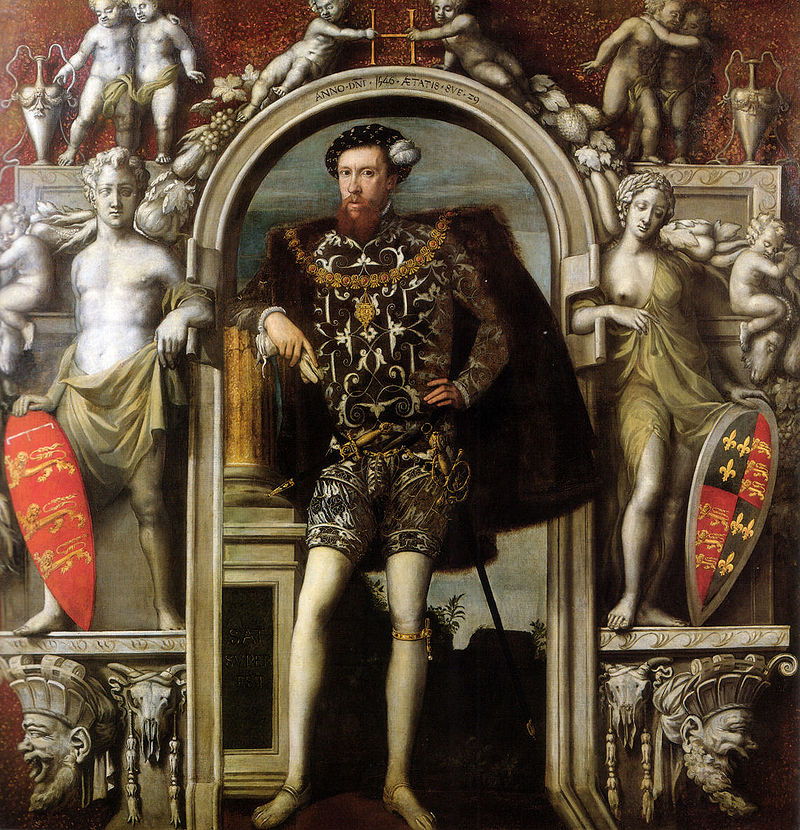
The Roman road of Stane (aka Stone) Street runs through Surrey from London to Chichester on the south coast of West Sussex. Henry VIII built his ill-fated Nonsuch Palace near Epsom click. Magna Carta was signed at Runnymede... which reminds me of the old Christmas cracker joke: Q: Where was Magna Carta signed? A: at the bottom. The Earl of Surrey, Henry Howard (1517-1547), a poet, soldier, patriot and courtier to Henry VIII is a towering presence of the English Renaissance, and gave us almost single-handedly, the sonnet form. Played here with bravura by Glaswegian David O'Hara click.
Henry Howard, the Earl of Surrey. Attributed to William Scrots 1546. click In proto-type cycling shorts, flanked by heraldic hoverboards?
So, who followed after Surrey to live in...Surrey? And where did they live? And were any of them associated with George? Of course some of them were.
I am grateful to the late Robert M Cooper for his quaint 'The Literary Guide to Southern England'; Mr Cooper was allegedly born in Manchester, though here click  he writes this about a companion publication:
'This book was written for the person who unabashedly loves travel, loves England, and loves English literature. In short, for somebody remarkably like the person I was when I began to plan my first trip to Britain and looked for just such a book.' Hmm... 
Anyhoo...

Amongst those literary figures linked to Surrey and to George (albeit tenuously!), are: 
Staines is linked to Dr Thomas Arnold, father of Matthew Arnold. The Dr was headmaster at Rugby public school (public school in the UK means privately run as in expensive fee-paying) where Thomas Hughes click was a pupil. Hughes wrote 'Tom Brown's Schooldays' and went to Tennessee to start the colony that Eduard Bertz, George's man-wife, briefly lived click
Farnham: JM Barrie and his wife lived in Black Lake Cottage, near to Farnham. They should have taken its name as a sign, because they fell out over an affair she had and JM Barrie divorced her, acrimoniously to the max. George was very drawn to Mrs Barrie himself, and once commented that he didn't know how such a stunner could be married to a weed like Barrie. George, ever the judge of female horseflesh, eh? haha.
Woking: HG Wells lived at 143, Maybury Road. As covered in previous Commonplaces. 
Woking's love of HG made into a War of the Worlds sculpture.
Burford Bridge:
There is that famous story of George attending the meeting of the Omar Khyyam Club at the Burford Bridge Hotel near Dorking held to celebrate the life of Meredith, where the old man who was frail and too ill for much revelry, acknowledged George by personally stopping to greet him - probably the highest point of peer respect George ever enjoyed. Subsequently, George went to tea at Meredith's Box Hill place many times, sometimes uninvited.
The Burford Bridge Hotel - needs a blue plaque? click
Mickleham was the 'Box Hill' where lived George Meredith, in a house named Flint Cottage. Box Hill is a much more historic place than might be expected click and click.
Meredith had lived in other Surrey locations, most of them off the A3, the link between London and Portsmouth, Meredith's shameful to him birthplace, only about an hour down the road. When at Box Hill, where he lived for nearly forty years, Meredith entertained many noted literary figures, including Thomas Hardy (George was jealous of him and mentioned Mrs Hardy's husband-baiting), Alphonse Daudet (George admired and liked his work), and Arthur Conan Doyle, JM Barrie. RL Stevenson (George admitted his harsh criticism of Stevenson was pure jealousy) Henry James (who kind of admired George's writings) and Edith Wharton.    

Dorking: Meredith's ashes were buried with those of his wife in Dorking cemetery in 1909. In 1871, 'The Battle of Dorking' was fought in the pages of the novella by George Tomkyns Chesney, one of a raft of 'Invasion' novels telling of England's vulnerabilities click. Was this an influence on HG Wells? Or to Robert Harris in 'Fatherland' (1992) click, or Ridley Scott and 'The Man In The High Castle' (2015) click.
For George, before Dorking, there was Epsom...

Epsom: click to find out more of its, and Surrey's, affection for George. Not exactly a reliable account, but I blame the sources more than the author of this piece.

Epsom is also famous for its salts click. What an interesting product, useful for treating many ailments including indigestion (a George default complaint), for improving soil, and to ease the pain of sore muscles. It is found in saline springs nearby to the town, where the chalk of the South Downs meets the London clay - a nightmare of geology for those choosing to live for crackpot reasons on the 'right' soil.
As everyone knows, limestone is composed of fossilised marine organisms, indicating the area was once submerged under a watery world. The writer JG Ballard (1930-2009) (a personal favourite of mine) click, who some might think of as a modern Wells, wrote 'The Drowned World' (1962) when he moved to Shepperton, Surrey, the place he remained in for the rest of his life.

Is there something about Surrey that works on the mind of the wordsmith?? Jane Austen, Ian McEwan and JK Rowling have all written books with settings or characters associated with the county. George brings it into 'The Whirlpool', 'In The Year of Jubilee', 'Our Friend The Charlatan', and 'The Paying Guest'. And, Surrey was George's last residence in England before he sailed for France. When he was nostalgic for England, would it have been the back streets of Wakefield, or the leafy lanes of Surrey in his mind's eye?