Sunday, 21 December 2014

Commonplace 29  George & The Sistine Madonna by Raphael The One That Marianne aka Nell Had On Her Lucretia Street Wall. And Christmas.


MERRY CHRISTMAS TO GISSING FANS EVERYWHERE


 Bah! Humbugger off and enjoy yourselves.

Monday, 15 December 2014

Commonplace 28   George & Whatever Happened to His Mojo? A bit of a ramble, but, Gentle Reader, go with me awhile...

How did George go from this...


To this...

Le Chant De La Violette (The Stone Men) 1979 Rene Magritte.
In twenty five years?

I've said it before - some readers, biographers, and academics select scenes and characters from George's books and make them into true life stories of their hero - they make fact out of fiction. Of course, writers who create fiction can't help but write about what they know: any notion of 'objective' in a work is, itself, subjective, so there will always be some sort of personal detail unconsciously dropped into a story. Often, these 'Easter Eggs' bring the reader closer to the writer, if only in a make-believe sort of imaginary way. If you are not familiar with the term 'Easter Eggs' (apart from the yummy variety) Google's definition is: an unexpected or undocumented feature in a piece of computer software or on a DVD, included as a joke or a bonus.

Rarely is painting and sculpture scrutinized for signs of autobiography the way that novel-writing seems to be - Tracy Emin and Marc Quinn, even Anthony Gormley (who all use their bodies or body parts in their work), aside. George discovered that a writer has severe limitations on what she/he produces, imposed by editors, the publisher and readership and in ways that a painter does not. A painter is free to demolish all preconceived ideas about what Art is, and evolve a personal visual language, preferably one that no-one has used before. A writer has to be as clear as possible whilst remaining within strict guidelines of what a reader thinks is readable. Publishers think in markets and genres that sell: a visual artist can do whatever she/he likes and call it 'Art', even if it doesn't sell. Is a painting or sculpture more accessible than a book? From the consumer's point of view it's easier to do - a split-second like/dislike or I get it/I don't get it choice. A book takes a chunk of your life - it's not a reflex action. Is a book still a book if no-one reads it? Or, is it just a paper brick? Someone, somewhere must be debating this, just as someone somewhere is debating 'Is writing Art or a craft?' - the sort of thing my Art history college tutor would set us as an assignment. I don't know the answers to any of this, by the way.

Blood Head by Marc Quinn. It's shocking, but is it Art? No idea. I'm vegetarian.

So, in George, thanks to the Letters and Diaries, we have an illusion of a life: the George that he wanted us to think he was and the George we want him to be. I am against taking what George writes as 100% reliable truth as he isn't always honest. And, my logic is this: if he can't tell the truth in his Diary and Letters, why would he reveal his secrets in the fiction? George was 'spinning' his persona as much in his fiction as he was in his factual stuff, so why can he be trusted to reveal anything intimate at all? That was very much not our boy's style: he was secretive and inhibited and suppressed (even repressed at time) - the confessional style was not his forte, and certainly not his conscious motivation to write. Much more Dyce Lashmar than Arthur Golding? A chancer (a roll of a Dice) chap who gets metaphorically thrashed (Lash-mar) or a legendry (King Arthur) Superhero (Gold-man)? A very careful self-serving spin is put on everything George writes - his mind was a little human Enigma machine for turning fibs into fiction, not facts into fiction. (And then there was the editing out of the Diary entries. More of that later.) But, we select who we want George to be - poor, doomed Arthur (the heroic Golden Child: vanquished) or Dyce (the Silver-Tongued Devil: all spin. I like both - and Dyce is one of my favourite Gissing characters. Only a woman could say that, perhaps. His very transparency - all that pompous front barely hiding the little boy beneath - is exactly the thing we women are supposed to think we can nurture out of a man-child waster. Pooh! to that.

But, let's look at one random little piece - one of the short stories. Now, in terms of plot, action and message, George's short stories superficially seem simplistic to the point of banality. They stroll by, hardly creating a stir; apparently anodyne, often deep in pathos, some worked up bits from his longer works. 'Dour' is a Scots' word (not 'Scotch', as George would say) that sums up the short stories: miserably gloomy, downbeat. Is this a reflection of the real George or the resentful artist grumpy at wasting his time on trifling bagatelles? He often decried his work but that was all part of the hype; the getting of sympathy. He toys with us, of course.
Spellbound is an odd little tale of not very much happening. A geezer pulls a fast one over his squeeze and her dopey brother to wind up living the life of Reilly as a kept man, all in very drab circumstances - their name is Dunn  - 'dun' being a very un-colourful colour as well as slang for asking for money in slightly dubious circumstances.
Health and safety update: the perils of reading a newspaper whilst smoking are obvious - it makes you saucy.
What makes Spellbound of interest is the set-up: there is this poor, lower middle class couple, the man is a reader and general dosser (with ideas above his very mediocre station), and the woman is easy-going and makes mantles. Sound familiar? Percy pulls a fast one over her to secure his right to be a lazy, feckless reader while she goes out to work to support him. She is too trusting by far (though George would say 'stupid') to see any selfish motive in him - she falls for his patter hook, line and sinker, and assumes his daily perambulations are to look for work that doesn't materialise through no fault of his. Percy employs what is known in psychotherapeutic circles as 'paradoxing'. Instead of telling her outright he wants to give up the search for work and read papers all day long in the local lending library - which he will enjoy - and that sponging off her would suit his style, he presents the notion that sitting reading in the library is an ordeal, an unpleasant and wearying chore. Maggie Dunn encourages him to keep at it - talks him into it! Percy's conceit is a ruse often employed by the passive-aggressive. Instead of asking you to make them a cup of tea, they mention they are thirsty so you offer to make them a cup of tea - sort of thing. They are absolved from criticism - you volunteered so you can't complain about being a waitress. Clever, eh? Weak, too. Anyhoo, Dunn bravely agrees to carry on the library searches and the daily fix of newsprint is maintained. In fact, Mr Dunn is addicted to this sort of reading matter the way some are addicted to pubs or betting shops or porn websites (you know who you are!), or George Gissing ha ha. The same way George was to reading high end literature and the Classics (so maybe he is mocking himself a little?).

Man Reading a Book 1916 by JC Leyendecker
So, off Percy goes and finds a sort of position that requires he live away from home. Now, the concept of the long-distance family was one George considered as attractive. A part-time husband; a part-time father, much as he was a part-time friend, sibling, son... Part-time writer, some might say! Not me, of course. All that reading he did was research ;).

After this stab at working away from home Dunn (unsurprisingly) falls out with the boss and comes home to a situation where his wife and brother-in-law work to support him. Finally, a man has won the domestic war! He is now living the dream: left to read all day and not have to earn a living. I have a sneaking suspicion this would have been George's preferred life - not a writer at all, but a reader (with a competence, of course!) Why, Percy Dunn is Henry Ryecroft in working-class embryo! Gone to seed? The name Percy Dunn - does that equate to sex is over as in the man has reached the end of his masculine life? Percy is slang for penis, though more often used back in the Joe Orton Entertaining Mr Sloane or the Confessions of a Window Cleaner outing starring Robin Askwith days (go to http://www.imdb.com/title/tt0071357/ if you have no shame and want to check out that one). 'Pointing Percy at the porcelain' still means a man urinating in a toilet - in some social circles (fortunately, not mine).

Satyr gazing at his navel. And possibly wondering why his Percy is so curly. He's just washed it and now he can't do a thing with it.
Spellbound was written in March 1896 when life with Edith was toxic and crushing. We don't really know much about their relationship - do we? What we have is George's version and his long catalogue of moaning about the way she acts towards him and the boys - but mostly, it's poor him. If she drove him to distraction imagine what he was like to live with! She probably desperately wanted him to be a better financial provider - if he was worried about his income, imagine she was equally as stressed over it. And he was a man who was constantly ill - but how would he be able to care for her if she fell ill? She probably wondered why he didn't get a job and write in his spare time - the security of a steady income might liberate his muse, - especially when all she saw of the creative process was George sitting reading Heine and Homer. Words like 'lazy' and 'useless' might have sprung from her lips... I'm beginning to sound like Amy Reardon, now ha ha.

Homer(s) Mural
George admitted himself he was sometimes weak, spineless and indecisive. At others, he was insensitive, implacable and cruel (funny how this melange of traits often goes hand-in-hand). To balance karma he was also generous, funny, intelligent, creative, courageous and unique in the world of late Victorian fiction. In the marriage (as in all his life) he tried to be assertive; he often failed. He tried to be macho; he often failed - but he was using very narrow parameters - success, money, recognition, moustache... He was a victim of a character that could allow itself to be taken over by others and subsumed by ideas that struck him as useful - usually that backed up his prejudices and fixed ideas -  hence the number of times he admits to associating with people he doesn't much like, or doing things he doesn't much want to do. Again, we turn to Morrissey: 'Why do I smile at people I would much rather kick in the eye?', from 'Heaven Knows I'm Miserable Now (https://www.youtube.com/watch?v=cUjZjyIyNoE) Or, in George's world: 'I was looking for a wife and then I found a wife, and heaven knows I'm miserable now'. He has become, by the time of writing Spellbound, a mess of a man-child, neurotic, insecure, bitter, fearful, plagued by real and imaginary ills, fretful and needy. What the feck happened to turn him from the man who survived Bellevue, yomped round America like a lower middle class Woody Guthrie (actually, Woody Guthrie was lower middle-class, too, so scrub that) self-published Workers, and owned a damned fine moustache into a quivering jelly-fish? Not that jelly-fish aren't people, too.
This Charming Man, Himself: Stephen Patrick Morrissey - Moz to his fans. Moz, the son George and Oscar Wilde never had?
Spellbound isn't really about Edith; it's about Marianne aka Nell (it was always about Marianne). She worked 'at the mantles' she supported him in the early days, and had to return to work even though he didn't want her to and she was probably too ill to be out of the house. George wrote to Algernon on February 25th 1879, 'I am sorry to say she (Marianne) has just begun to work again.' While he toiled over Workers, out she went to earn their keep. It's about now that lentils enter the scene for their brief fifteen minutes of Gissing fame. These were the days when he had enough love in him to care for someone else. It was short-lived, but it was glorious for a while.

George returned from America in late 1877, just before his twentieth birthday, after an abortive overnight stay in Wakefield (where he wasn't made welcome) he set off for London to follow in Charles Dickens' footsteps to make his living as a writer. America had taught him the horrors of poverty so at least what he found in the capital could not have shocked him. He managed to find a tiny slum dwelling into which he crawled, to then set about trying to find work of any kind. He must have been set up with funds possibly from his mother, as he seems to have returned to England on borrowed cash and would not have brought much with him from his year of exile. His attempt at Bohemian life was basic but good for copy.

In London, what could he turn his hand to until the writing paid off? What would young George's USP be? I'm talking about work skills here, not the other high-falutin' stuff. A cv, were it to be manufactured, could not be too accurate of course (what cv is?) for obvious reasons. Though he was a stranger in town and could have selectively used Wakefield people as referees. We know Owens gave him a certificate of attendance for the work he did before exile, and it would be obvious this young man was a cut above the usual lower middle class job applicant. What could you put on a reference for George? Well, apart from leaving out the embarrassing bits, you could say he was diligent, quick-witted, intelligent, hard-working, with good literacy skills, a bent for drawing and the visual Arts and a good knowledge of botany. You could emphasise his time-keeping was good (obsessives tend to be punctual), and he would be a reliable worker if allowed some leeway to 'do his own thing', so as his slight tendency to be a bit of a know-it-all could be harnessed. On the down side, you could say he was stubborn, wilful, arrogant, not a people person, but relatively socially skilled; a man who accepted duty as the norm and would rise to a challenge if given one (a challenge, I mean!). What I might not mention (apart from the obvious) would be a degree of what might be term PTSD - post-traumatic stress disorder that might render him unreliable, especially under pressure.
Death, the Knight and the Devil; 1513, by Albrecht Durer. A work of utter genius. I spent two years at primary school sat right next to a poster of this - which explains a lot.

PTSD is not confined to survivors of war zones. Any stress perceived as a persistent threat can escalate to an incapacitating level. Being shamed at Owens, four weeks in prison, a lonely, scary, destitute stint in America, the shame and rejection in Wakefield, the loss of all his hopes and dreams - the possible end of his love affair with the girl he left behind in Manchester- if that's not enough to shatter one's psyche. However...

According to the Mayo Clinic (http://www.mayoclinic.org/diseases-conditions/post-traumatic-stress-disorder/basics/symptoms/con-20022540): PTSD symptoms are generally grouped into four types: intrusive memories, avoidance, negative changes in thinking and mood, or changes in emotional reactions.

We would not know if George suffered from intrusive thoughts about Owens and the days before he arrived in London. All that disappointment needed a counter-balance - was the woman he married and his fledgling writing career enough to blot out the pain of the memories? Did he have to immerse himself totally, selfishly, decisively rigidly, obsessively in order to prove it had all been worthwhile (he considered himself a genius writer after all the Owens fuss died down) or to keep the black thoughts at bay? In an already depression-prone mind (according to his sister Nelly) how did he battle those demons? Avoidance, negative changes in thinking and mood, or changes in emotional reactions - well that could be the story of the rest of his life.

George soon abandoned the old socialist side of his nature, the part so carefully crafted by his father. The way he ditched Marianne is cruel beyond belief - it's no wonder biographers manufacture her story to absolve George for his shameful wickedness. Making her into an alcoholic, despite the lack of proof, condemns her to be in the bracket of a woman deserving of his treatment because she brought it on herself through her own wanton fallibility. (Of course, if it were true then she would be a victim of a recognised illness, but I digress into an area where rational thought rarely tiptoes.) Was all George's subsequent perfidy an attempt to cover over just exactly how self-servingly ruthless he could be, not how weak he was? Was he so threatened by his own egotism and failings of character that to raise himself up in his own eyes (to the level where he could realise his genius) he had to resort to Darwin for approval of his decision to cast Marianne aside to her fate, sully her good name in the process and then have the cheek to want sympathy when she died?

As well as being a betrayal of their wedding vows, turning her out to live in digs on her own or with paid carers - this horrendous pattern of removing himself from any situation that stood between him and his damned reading (he spent more time reading then he ever did writing) started here, with this abnegation of every principle or moral he previously held dear and I think this one act of cruelty is what dragged him down. The guilt, the regret, the utter shame of abandoning a sick woman guaranteed his banishment from all his father believed in - even from his entitlement to a father's love. Stealing is understandable and forgivable; cruelty is a stain on the soul. In a lifetime of some pretty hefty unheroic moments, this one act ended the era of the optimistic, loving, unselfish (even heroic) George and started the era of the callous selfish, cold martinet. His soul was never to recover. It was only his own sickness and dependency that accorded him a smidgen of insight into how much Marianne had needed him. And I think this is why he destroyed the Diaries. Not because they were risqué and salacious, and he wanted to spare Gabrielle's blushes (she was French, FFS!) but because he was deeply, deeply ashamed of himself. How he must have mourned for the old George.


Tuesday, 9 December 2014

Commonplace 27   George & His First Born, Walter.

In honour of Walter's Birthday on December 10th. Not a biography but notes on his brief, heroic life.

Happy Birthday, Old Sport.
'Thursday's child has far to go', says the rhymeGeorge wrote in his diary on Thursday, December 10th 1891: 'So, the poor girl's misery is over and she has what she earnestly desired.' Which means one can assume Walter Leonard came into the world very much wanted by his mother. What were his father's thoughts? A planned pregnancy or a contraceptive malfunction? A means to keep Edith occupied and out of his hair?

Mother and Child by Pablo Picasso 1921
By December 30th, George has moaned on for twenty days (with the exception of December 27th: 'Baby quiet, seldom troublesome') and writes in the diary: 'A day of misery, once more, and bitter repentance.' For the marriage - which he forced on Edith when she was back-pedalling and disaster could have been avoided? Or, the birth of his son? George and Edith had been married for just 10 months. Was it an omen they married on what would have been Marianne aka Nell's 33rd birthday?

Greek Boy With Duck. Possibly a depiction of a sick child needing divine intervention holding an animal about to be sacrificed to the gods.


Iseppo da Porto and His Son Adriano
by Veronese c 1580
George wrote to Morley Roberts on November 3rd 1895 (when Walter was nearly 4 years old): 'My own experience teaches me how terribly cramping it is for a father to take keen interest in the child from the very first & to have much to do with it'.

What can have possessed him to commit this thought to paper and posterity?  Did he not think either Walter or Alfred would read it at some time, when they trawled through their father's writings?
Whatever George amounted to as an artist, it is hard to excuse his treatment of human beings - especially those nearest and dearest to him - his wives and children.

Walter was first a disappointment, then a challenge, then little more than a burden to his father. The baby's mother seems to have failed to bond with him (a situation more common than you might think), and George tells us she beat him. I suspect her failure to feel much motherly love, initially, was a combination of post-partum depression (after a labour and birth of traumatic suffering) and that the infant Walter was sickly possibly with a mild form of scrofula, the TB his father suffered from and failed to tell his mother about. Walter was blemished with a large mole, had a severe rash that made him tetchy and kept him awake, and breast-feeding was too painful for the already ailing mother to endure. Many women have problems with breast-feeding, and often the cycle of pain, disappointment and anger corrode the mother-child bond. George would not be much use to her, being lacking in sympathy (though even he acknowledges the suffering she endured during the birth) and hugely disappointed that the fruit of his loins was such a horror - he reports neighbours being shocked at Walter's appearance when he pushed the baby in his pram.

No doubt Darwin was speaking in George's ear and hinting at some blight to the bloodline of the child's mother - after all, 'aristocratic' fathers do not beget defective offspring, do they? No doubt Edith sensed (or was told) this at some stage. And, let's be clear: Edith was living with a passive-aggressive tyrant who no doubt belittled her at every turn, a weak man who disabled her in life with his patronising and critical character and who failed to do more than honour the basics in the marriage. In a previous blog I mentioned all he required of her was an ability to manage servants and own a vagina. Well, she couldn't do servants, and then this freak of Nature pops out of her vagina... When did George start to think about getting rid of her? I suspect long before Walter arrived.


Portrait of Alexander Cassatt and His Son,
 Robert Kelso Cassatt by Mary Cassatt 1884
Baby Walter was miserable and wailed for comfort he did not get, so was shipped off for the first time to outsiders to raise him while one or both of his parents went on holiday. He could have been nursed at home on cow's milk and any one of the proprietary baby feeds he was later given, or even wet-nursed. By the 1890s, wet-nursing was coming out of vogue, but in Devon, not strictly the cutting edge of social advancement, it was a common enough event. But, off little Walter went on January 14th 1892, all the way to Brampford Speke (Thursday's child has far to go...), for a diet of cow's milk. By February 8th, off his parents went on holiday to Penzance.

(Literally) farming out his children was a regular pattern for George who was to exercise this 'Get Out of Jail' card whenever it suited him. However, let us not dwell on George's lack of fatherly-feeling - after all, didn't he take more after his mother than his father? Substitute her religion for his conservatism, and you begin to see his character was much more like hers. Think about it!


Again, what possessed George to write in his diary (written whilst the family of four was on holiday in Mablethorpe) on August 9th 1896: 'What a terrible lesson is the existence of this child, born of a loveless and utterly unsuitable marriage?' (And, still, some call George 'heroic'? The whole entry is a terrible stew of offensive remarks about his boy.) 'Nothing could be more difficult than my position as regards the boy Walter. All but every statement made to him he answers with a blunt contradiction; to all but every bidding he replies, 'I shan't'. As I sit in the room, where the nurse-girl is present, he calls me all manner of names. I said to him this afternoon, that, as it was too windy to go out, he had better rest an hour. 'Not in your bedroom', was his harsh reply. 'I'll rest in mother's room, but not in yours.' And tomorrow, on some trifling provocation, he would make precisely the opposite reply. He knows there is no harmony between his mother and me, and he begins to play upon the situation - carrying tales from one to the other, etc. The poor child is ill-tempered, untruthful, precociously insolent, surprisingly selfish.' (George is still talking about Gubbins, the boy child, but might as well be speaking of himself ha ha.) He ends the piece with the above quote about being Walter being 'born of a loveless marriage...'. Before the holiday, George had been referring to Walter (in letters quoted in the Diary) as 'my dear boy' - when absence had made his heart grow stronger? Had it never crossed George's mind that Walter, on being temporarily reunited with his parents and baby brother, might feel resentment at being the boy rejected and made to move out of the family home, or that a five year-old might think his parents didn't love him because, look, there was Alfred, effectively the only child now that his older brother was out the way. And what of his self esteem? Already blighted with the mole over his eye, did he feel completely unlovable because perfect babies like Alfred weren't being exiled? Children are never naughty because they are intrinsically 'bad' - they are made bad by useless, incompetent, insensitive adults.


Gubbins the Fountain Cherub by  Piero da Vinci (father of Leo)
We know Walter liked Nature, Art and building stuff out of toy bricks. George records in the Diary how when on holiday in Mablethorpe, the boy was fascinated by engines and machinery and how they went to see an operational windmill. George writes in the Diary August 2nd 1896: 'He still shows interest in every mechanical contrivance, is never tired of examining sluices, etc, or agricultural instruments. Perhaps has less of the aesthetic tendency than I hoped...' Walter was four years and eight months old.

Walter was an independent-minded soul who rebelled whenever he could and gave a good account of himself in combating the 'children should be seen and not heard' mind-set. We read George's account of Walter being upset over the 'cow with the crumpled horn' story (identifying with a similarly blighted creature?) so this shows empathy. He was  fussy about his clothes, which may have been a sign of over-enthusiastic and insensitive potty-training. Both Walter and Alfred suffered from urinary tract infections in their young years, which may have been caused by problems with potty habits or the wrong sort of sympathetic approach to nocturnal enuresis. (Of course, a Freudian might term fastidious attention to clean clothing as an 'anal retentive' trait.) He liked cake. He was possibly a victim of physical abuse from his mother, and it seems he could be a bit of a bully to his schoolmates (as is so often the case with abused children) - or maybe he just liked a good ruck. He was not much loved as a child, being, as he was, used as a weapon by both parents in their internecine war of attrition. The mind boggls at the pressure he was under - from all sides. The constant criticism and tellings off; the being made to feel bad; the baffling rejection; the love that did not come through the pipeline; the fear of abandonment that must have carried forward to adulthood; the feelings of inferiority; of being constantly judged; of being unlovable. Nowadays, Walter would be classified as a victim of child abuse, pure and simple. A social worker would have kept an eye on the situation and recommended a range of interventions - including parenting classes for George and Edith. Emotional abuse, physical abuse, sexual abuse and neglect are now offences - Walter could claim 2 out of those 4. Alfred's might have been 3.
 

From the time of Walter's exile in Wakefield - after his father kidnapped him and took him without his mother's knowledge (today George would have been jailed for it - another offence, but biographers let him off all charges. If Edith - or any woman - had done it, she would have ended up in the dock), there are letters to the boy, not very naturally affectionate, smacking of duty rather than a close bond being lived. Guilt seems to have been a prime motive - guilt at having brought the boy into the world? Maybe George couldn't forgive Walter for being Edith's child. Was it really in Walter's interests to stay with the Gissing sisters and their child-beating mother in Wakefield? And, knowing his own mother's liking for corporal punishment, why did George make such an issue of Edith beating the child? Perhaps the answer to all the 'why did he do it to Walter?' questions can be answered with this: in a letter of April 1891, sent from Wakefield to Algernon, he writes 'The little lad will remain here, and be taught in the girls' school... His home has become utterly impossible. You cannot allow a hot-tempered child to grow up in an atmosphere of sordid quarrel; it would be monstrous injustice. Had not this opportunity luckily offered, I would have sent him to strangers. I will not allow him to hear perpetual vilification of his father and all his father's relatives and friends - vilification utterly undeserved in each and every quarter'. Even in and amongst George's standard lack of insight - or standard unwillingness to take the rap for his misdemeanours - here we see him blaming Edith for everything, punishing her and Walter with the ultimate sanction of the child being dragged from his home, his brother and his mother. And why? Because George resented Edith's complaints and arguments. He mentions 'vilification' twice, so that was the issue; whatever was best for the boy - and we know children thrive even in the most dysfunctional families and that siblings are best-served by being kept together - was irrelevant; George, as ever, went for what was best for himself. Cruel, hard-hearted, selfish, vengeful - yes: but, heroic? Not by a mile.

Zeus and Thetis by Ingres.  
Did the repressed Gissing sisters only make Walter worse with their lack of skill at foster-parenting? Would he have been better off with Algernon or Edith's family? What were the Underwoods' feelings on the subject? Not that it would have mattered. George would never have let Walter go to the Underwoods, would he? When Edith's brother George (!) arrived unexpectedly at the Exeter Love Shack on April 18th 1891, our man notes it in the diary with his usual 'eheu!' remark of distaste and resignation. Not surprising a brother should want to see his sister who had moved so far away with a man Mr Underwood Snr did not like, and who was more or less friendless in the world. Obviously, George the writer had no intentions of bringing the Underwood family closer to the Gissings. What a terrible snob he was :(.


Of course, Walter was too much for his incompetent Wakefield aunts and grandma, who could not manage his behaviour, or give him the love he so desperately needed. They eventually rejected him and passed him on. Even these two women with such stunted, parochial lives must have realised Walter's unacceptable behaviour was little more than a cry for help from an emotionally disturbed child with cripplingly low self-esteem who was desperate to be wanted. Or were these two school teachers too immersed in fretting over their eldest brother? Or so focused on translating their Greek tragedies to notice the English one unfolding beneath their toffee noses? Luckily, Walter was sent to a school that could offer him structure in a nurturing environment with opportunities to shine and rebuild himself with emotional bricks - and for some sort of 'normal' life amongst 'normal' people. He continued to be shoved from pillar to post for holidays, but he survived the war that had been his childhood. Despite the loveless family upbringing, as an adult he seems to have kept in touch and on good terms with the Wakefield (later Leeds) group. He does not seem to have been the sort to bear a grudge.

It's all the more amazing that George ever considered himself a critic of contemporary mores and a commentator on children's education - areas he wrote about - after he failed spectacularly with his own children. He actively did not want either boy to read much or study and get to university - why? Would that have been unbearable to the ego of the man who screwed up his own chances at a degree? Did he think both boys being born of a defective mother would not account themselves well, academically? Being born of a defective father probably never crossed his mind. If he truly believed being educated in Greek and the Arts made him 'aristocratic' - why did George deny that to his sons? He might say what he liked about Demos, the working classes are usually in favour of their children 'bettering' themselves with education. And, despite all that stuff about Comte and the likes of Fred Harrison modelling how to raise boys, George still failed to be an honourable father. Heroism begins at home, much as charity does, after all.

Demos, hoping their children might get a better life.
Thank goodness Walter's miserable childhood did not blight what he had of an adult life. He became a restorer of ancient buildings and worked for an architect - all that building stuff with toy bricks paid off. If he had survived the Great War, he might very well have chosen to go to university to study architecture. He had a fiancé - sounds normal to me, none of his father's self-destructive spineless egomania in play. I hope she let him get to at least second base before he went off to war - hopefully, third. Fourth would have been totally unlikely!

The Kiss by Rodin. A version of the more famous piece.

Walter, I feel sure, liked Art. What sort of thing, we don't know, but with his love of Nature and his rebellious streak, and I suspect a disdain for convention, I have chosen some British Art he might have enjoyed had he lived beyond the First World War.


Cat by Gwen John 1904/5
 
Swanage by Augustus John undated

Nude by Wyndham Lewis 1919

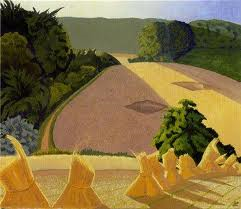
Cornfield by John Nash 1918
The Arrival by Christopher RW Nevinson 1914 
Merry-Go-Round by Mark Gertler 1916

Abstract Composition by Jessica Dismorr 1915

Wrestlers by Henri Gaudier-Brzeska 1913

Still Life on the Corner of the Mantelpiece by Vanessa Bell 1916

 This Be The Verse  by Philip Larkin

They fuck you up, your mum and dad.   
    They may not mean to, but they do.   
They fill you with the faults they had
    And add some extra, just for you.
But they were fucked up in their turn
    By fools in old-style hats and coats,   
Who half the time were soppy-stern
    And half at one another’s throats.
Man hands on misery to man.
    It deepens like a coastal shelf.
Get out as early as you can,
    And don’t have any kids yourself.
HAPPY BIRTHDAY WALTER!!


There is an excellent account of Walter's life by Pierre Coustillas in the July 1996 Gissing Journal. Available online.

Saturday, 6 December 2014

Commonplace 26   George & Masochism

Post card advocating 'striking arguments' to keep your man in check.
The chap could be GRG? And she could be Edith?
It could be argued that George loved to suffer. Some of his more self-inflicted suffering episodes - the almost poverty, the lack of a social life, the sticking to writing books that no-one wanted to read; that hang-dog expression he sometimes wore; the demand for 'sympathy' in order to function - does have 'kick me' written all over it.

Masochism has two pathological realms: the sexual and the psychological. Sexual sadism and masochism are linked in a supply and demand way, and we do not need to dwell on these mutually enjoyable diversions. Was George a sexual masochist? Who knows and who cares!
What is meant by the charge that George was a masochist is, I think, that he courted and even enjoyed losing; suffering; being at the bottom of life's heap. Is this true? If so, where did have its origins?

We know George's mother was a strict disciplinarian who thought nothing of beating her children or locking a child in a cellar for being naughty. It was a time of strict adherence to the old saw that 'to spare the rod is to spoil the child'. Middle class England in the late 1800s was terrified of breeding a race of rebellious children. Christian religious groups were enthusiastic corporal punishers - not surprising for a faith that makes an icon out of a man being tortured and murdered on a cross.

Spanking the Bad Boy by Pavel Osipovich Kovalevsky date unknown to me. Weird.   
Mrs Gissing, with five children to raise, had to run a tight ship. Three boys was a challenge, though it is very hard to think of George, Will and Alg as being anything but little angels. However, headstrong and adventurous George would probably have been less than cooperative at times - ever rebellious as redheads often are. If his mother beat him, it would have been emotionally as well as physically painful, and humiliating - especially in the face of his two brothers looking on. Children do not question how they are treated by adults, but most tend towards being ashamed of being punished. Was this heady mix of pain and humiliation the catalyst for adult emotional tendencies? 
Soul in Bondage by Elihu Vedder 1891/2
There is a movement afoot in the world of psychiatry to classify the psychological state of masochism as a form of neurosis. To differentiate it from the sexual form, the subject can be said to be suffering from masochistic tendencies if the behaviours do not occur exclusively in response to, or in anticipation of, being physically, sexually, or psychologically abused, or if the behaviours do not occur only when the person is depressed, and when the subject:
  1. chooses people and situations that lead to disappointment, failure, or mistreatment even when better options are clearly available
  2. rejects or renders ineffective the attempts of others to help them
  3. following positive personal events (e.g., new achievement), responds with depression, guilt, or a behaviour that produces pain (e.g., an accident)
  4. incites angry or rejecting responses from others and then feels hurt, defeated, or humiliated (e.g., makes fun of spouse in public, provoking an angry retort, then feels devastated)
  5. rejects opportunities for pleasure, or is reluctant to acknowledge enjoying things(despite having adequate social skills and the capacity for pleasure)
  6. fails to accomplish tasks crucial to their personal objectives despite demonstrated ability to do so, e.g., helps fellow students write papers, but is unable to write their own
  7. is uninterested in or rejects people who consistently treat them well, e.g., is not attracted to caring sexual partners
  8. engages in excessive self-sacrifice that is unsolicited by the intended recipients of the sacrifice.
for more on this: http://en.wikipedia.org/wiki/Self-defeating_personality_disorder

Well, you just have to read about George's tragic life to know some of this might float. Here are random, brief examples I can think of; you can add your own.

1. Poor Edith, totally unsuited to George and deserving of so much better from life. It is difficult to know which of them suffered more. My feeling is, of course, Edith was the one who came out worse in that struggle - to the extent she suffered tremendous hardships she probably would have avoided if George had not married her. And, as for Marianne aka Nell...

2. Turned his back on Fred Harrison and the offer of some journalist work that would have set him up and allowed him time to write whilst earning a decent living. Think of WT Stead to know how influential he might have been as an editor or journalist. It was good enough for Daudet, Mr Gissing...

3. George always emphasised the lack of worth of his work, even when it was the product of inspired graft. Tends to get ill when things should be starting and offer a turn for the better - holidays, especially, saw him floored by sore throats and phthisis. Moving house: likewise - always for something worse. The same after the birth of his sons - he saw the children as a mistake.

 4. The Owens debacle. Was his ego so huge he thought he was above the law?

5. His entire adult life. 

6. His method of writing and the way he cut himself off from sources of material to write about. Refused to stop buying books when he was eating lentils - and making his ill wife live that way. Admitting his faults and yet not attempting to change.

7. Many people were glad to offer him social invitations but he withdrew under the false banner of saying as he couldn't return the hospitality, so his pride would not let him accept. Then he moaned about being lonely. Allowed his sensual nature to reject Clara Collet (she wasn't pretty - and she was chubby) who would have licked him into shape.

8. George underestimated his selfishness in proposing to two women who were taken on under false pretences. Both had to endure his brutal make-overs, and both were made miserable by him. Both had their lives ruined before being dumped by him, not before he went crying to anyone who would listen about what a terrible time he was having living with 'unsuitable' women who refused to comply with his heartless, snobby, ghastly fascist regime. Did he ever give a twopenny toss for anyone else but himself when it came to the love of a good woman? And all that recording of bread and butter and cold tea being his only meal - poor George!

An invitation to S&M?
Am I being unfair? Well, as a masochist, George would appreciate my comments LOL. He was weak - he knew that, but he flaunted it, he didn't cringe at the admission. The famous phrase 'More than most men am I dependent on sympathy to bring out the best that is in me' - is embarrassing to read, and likely to engender pity rather than sympathy. It is designed to disarm criticism and feedback, to stage-manage the other person's responses and perceptions. Did he ever try that philosophy on Marianne and Edith? Did he give them 'sympathy' - or just a sound psychological thrashing? Freud, who did some of the first work on the subject of sadomasochism, believed the two were indistinguishable: that sadism is just the other side of the coin of masochism.

The Limbic System, that sausage and mushroom - shaped mass just behind the eye is the key to the emotions, feelings of empathy and much more.
There is a cruel streak in George and a lacking of human feeling. For example, he was cruel to his first wife, eventually abandoning her when she needed him most. And his truly shocking abandoning of his children is shameful, and not the behaviour of anything but a truly selfish human being. Who can forget that last meeting with Alfred with George not even speaking to the wee chap? Of course, George mentions it to focus on his own feelings, and there is no account of him wondering how it might have affected his boy - or might ever affect him when he read his father's documents.  George seemed not to care who raised his sons as long as it wasn't him. As ever, he gave money but not himself in a relationship. We can make excuses - much as he excused himself - but it was heartless to send the boys off to strangers and to separate them. And cruel not to allow Edith contact with Walter - George acted on this to suit himself to solve a problem he could not resolve and I suspect, to demonstrate power over his wife - even, to punish her for her lack of cooperation. Even in the 1890s any exploration of the debate around child welfare would have alerted him to the risks for their emotional development and future happiness. George made so much mileage out of his own self-inflicted suffering and yet seemed incapable (or unconcerned) about how his dependents might survive alone in the world. Not very 'heroic'.
He's enjoying that!

Sunday, 30 November 2014

Commonplace 25   George & His Health. So Much More Than Man Flu.
Aesculapius - Greek God of Healing
George suffered from a range of ailments over his relatively short life, cataloguing them in the Diaries, along with any treatment or intervention used. This might seem like a morbid way of carrying on - guaranteed to depress anyone. Before the time of antibiotics, x-rays and all manner of medicines we now take so for granted, most diseases were not fully understood or diagnosed. Syphilis, the 'great imitator' was often mistaken for cancer or any form of TB. I recently totted up the number of skin lesions syphilis is still routinely mistaken for - and stopped at 28. click and follow link for complete article

In a time of poor standards of health amongst the vast majority of the population, it is easy to see why everyone must have monitored the state of their own health - and that of their associates - obsessively, especially within the middle class who had the education to research their ills and the money to pay for cures. Indeed, over the course of his recorded life-story, so often is George ill, that it is a remarkable thing when he records he feels well.

Over the counter American cure
circa 1878.
One of the first bits of intelligence on record about George's state of health is that infamous letter from John George Black back in the Owens days. John writes not exactly in great distress, to consult George about the state of his penis. It appears George is a penis health expert, having been afflicted with some sort of malady in that direction, himself. Odd that George, ever the prude should discuss his private parts with another fellow (a very modern notion, I always presumed), but there is 'nowt as queer as folk' - as they say in Yorkshire. As George had a background of sorts in medicine by being the son of a dispensing chemist, presumably he was in a good position to feel such matters as sexual health advice were very much his sphere of expertise. We are talking of spring 1876 when George was 18. John is a little older, but a whole lot less knowledgeable because it is the older chap who needs guidance about the blebs on his penis, and some sort of supplementary advice about what George had to do about his own infection - assumed to have been treated by Dr Wahltuch. Was John George what might be termed a bad influence, or was it the other way round?
George had gastric problems which might have been a bit of wheat intolerance.

We know George had phthisis, the pulmonary form of TB, because he tells us he has it. Worries about his chest in the form of bronchitis, catarrh, coughs, sore throats, endless colds - does George hold the record for the number of sore throats suffered by any writer in the English language? A sore throat and a cold seemed to break out at every change in circumstance or fleeting weather condition, change of location, sea voyage, train ride, long walk, lack of long walk.... Wind, sun, rain, snow - all brought George out in some sort of ailment. And then there were the mystery complaints with no real specific features - generalised anxieties, feelings of doom and unwellness, emotional crises, suicidal thoughts, various skin rashes, lumps... All these seemingly trivial ailments could have been systemic TB - but could just as easily have been the signs and symptoms of syphilis. Generalised feelings of unwellness, vague sensations in bodily systems...  mighty suspicious.


George also complained of trouble with 'rheumatism' in his shoulders. Apart from the cold and damp living conditions he sometimes endured, and the wet weather of wherever he walked, the endless weight of wet clothes, also the posture sat at the writing desk, or in an armchair could produce trouble with the joints and muscles. However, in George's day, the term 'rheumatism' meant aches and pains generally and did not refer to a specific condition. Nowadays, there is no such thing as 'rheumatism' as a diagnosis - it is referred to as 'rheumatoid disease'. It is not a result of living on wet foundations or wearing wet clothes or feeling the cold - it is an auto-immune condition with no known aetiology, presenting as swollen and painful joints. Did George have this? Auto-immune disease is not a twenty-first century condition so it is possible he had a form of it, contracted from any one of the predisposing factors of stress, immune reaction to viruses and diseases, even environmental pollutants. click for more

What about his tendency to solitude and solitary fretting?

We know George physically isolated himself from company refusing most of the social invites he received. More pernicious was the removing himself emotionally and sympathetically from his fellow human beings - his loneliness was deep-seated anomie. Such a dislocation of social interactions and the self-imposed solitude must have affected his wellbeing. This is a characteristic of the tertiary stage of syphilis - but there is no hard evidence this was the actual cause of his antisocial tendencies. However, he began this attitude early in his adult life, about the time that syphilis might begin to impact on personality, and so these changes might have alerted him to the possibility he was approaching the latter stages of the disease. He often spoke of dying young - was this because William, his brother, had died very young, and his father, too? Was George afraid the signs of syphilis might prove shameful if his friends discovered them. Whenever there were eruptions or manifestations of systemic disease, it would be embarrassing to turn up for a social event, and have the women scared off by his disease. Men of the world like Frederic Harrison would not have over- reacted, but Mrs Harrison might have had friends she was wanting to shield. Having said that, Harrison probably knew about it and told his wife - they were both intelligent and worldly.

George certainly lived in challenging environments both inside and out of, the home. One thinks of the filth clogging the streets of any large conurbation, the smoke, the cancerous fumes of industry, the filth of the waterways, the dirt of Demos (I am thinking as he would have). Stress will have paid its part in undermining his immune system - something we understand a little of now, but an unknown concept in George's day. Endless worry over real life and making money, fear of his past being exposed, fretting over marital discord, the dreadfulness of servants, the lack of zestful sex, the nationwide lack of interest in Greek poetry, the dread of taint from mixing with inferiors, and the ever-present threat of rain, could have triggered and auto-immune response that brought about the condition, but, what else might it be?


Extra-pulmonary (ie, not situated in the lungs) TB of the bones: Pott's Disease. What George describes as being located in his shoulders, was probably a problem in his spinal column -  Pott's affects the major bones but the thoracic vertebrae are a common seat of degeneration. Towards the end of his life, George was plagued with what he termed 'sciatica' - again, this could be Pott's Disease of the lower back, long leg bones, and the hip girdle. Added to the phthisis symptoms of bronchitis and colds, the bouts of diarrhoea and pains in the groin (inflammation of the testicles 05/10/95!!) - a diagnosis of TB in many of its forms is probable - the skin lesion on his forehead, the problems with his heart - almost every ailment he suffered from can be laid at the feet of TB. And syphilis.
Cures Consumption???
When he was on his 1897 tour of Italy, George contracted what he initially reported as a severe cold but which was, in fact, an exacerbation of his phthisis in the right lung - 'that old enemy' is how he describes it. His physician, Dr Sculco, recommended a double dose of quinine powders, which George took - and then tripped out on the side effects. he suffered fever and
delirium:
I saw wonderful pictures, beginning with pictured vases, and sepulchral tablets, and passing on to scenes of ancient City life, crowded streets, processions, armies etc. The remarkable feature was the bright and exquisite colouring of everything. Marvellous detail, such as I could not possibly imagine of myself. Scenes succeeded each other without my ever knowing what would come next. A delight - in spite of my feverish suffering. Lovely faces, on friezes, tombs, and vases. Landscape flooded with sunshine.

Perhaps quinine working on the brain - or was it perhaps the beginnings of the brain variant of TB that pre-empted his first wife's heroic struggle or the neurosyphilis/paresis I suspect caused Edith's mental collapse? Quinine was routinely prescribed for syphilis in its tertiary stage; symptoms of tertiary syphilis, with a slow onset, might explain George's frequent severe headaches, the insomnia that left him exhausted, the lack of application to his work, the obsession with Veranilda and its research, the lack of feeling for his fellow beings (but not animals) the depression of affect that dogged him and made life so difficult - even his deteriorating eyesight. it would explain why he tried so many cures - all the latest fads he followed - from creosote to cod liver oil, from vegetarianism to cold baths - and all the stuff Gabrielle recommended in her letters. Who knows how he contracted TB - probably way back in his childhood, in those Wakefield chemist shop days, perhaps, or walking the spit-streaked streets of Manchester, London, Boston, Chicago. He contracted syphilis at Owens College - when he was not much more than a boy. No wonder he was messed up in his mind about so many things - Fate had dealt him a severe blow.

Say 'Ah'.
Like many men, George was not mentally equipped to handle ill-health, despite his close association with it, and his home circumstances did not support adequate nursing care. This is what did for Marianne, of course: chronic illness played out in an environment of great adversity. I wonder if he ever gave her a second thought after her death? When he was laid up in agony and lonely fear of death, did he ever wish he had been more supportive - more sympathetic - to her? Did he come to understand her more deeply? Towards the end of his life, those last few years with Gabrielle, when he had ensured he had a helpmate to care for him, did he ever wish he had been more... kind-hearted... to his first wife? Marianne was denied nursing care at the end: 15/- a week does not stretch to paid staff. As he revised and cut and paste his diaries, did he consciously expunge the entries that demonstrated his lack of feeling towards her? Did shame for how he treated her bring him to decide to destroy all reference to Marianne - not because of her past but because of his heartlessness? Of course, that self-serving stage-managed description of the pathos of her Dickensian death scene and burial arrangements was kept in (probably reworked for maximum effect) so that posterity might be led to believe he did all he could for her. Frankly, Mr Gissing: No, you didn't. At your end you had friends and loved ones around you. Heroic Marianne had no-one.


World TB Day is always March 24th - to commemorate the discovery of the TB bacillus by Robert Koch (1882).
For fascinating info on TB:
http://tbsymptoms.net/
AND
http://www.slideshare.net/ashrafeladawy/history-of-tb

All medicine ads come from the Wellcome Institute website http://www.wellcomecollection.org/tonics-and-curatives/?image=25

George's Diary is the usual one with the very long title ed. Pierre Coustillas, bless him.